
The question every demo ends with
When we show E1pi reading a bank statement and posting the entries, or checking a supplier's bill against the quote, the first question is rarely about the AI. It is: what did it just send, and to whom? That is the right question, and it has a precise answer, because an AI product is not one thing. It is three things in a row, and your data is treated differently at each of them.
The three are the AI server, which is the model that thinks; the AI harness, which is the software that does the work, and where every tool call runs; and you, on a browser, the app, a Teams chat or a WhatsApp thread. Most of the confusion about AI and data comes from treating the three as one. Once they are separate, the policy reads in a minute.
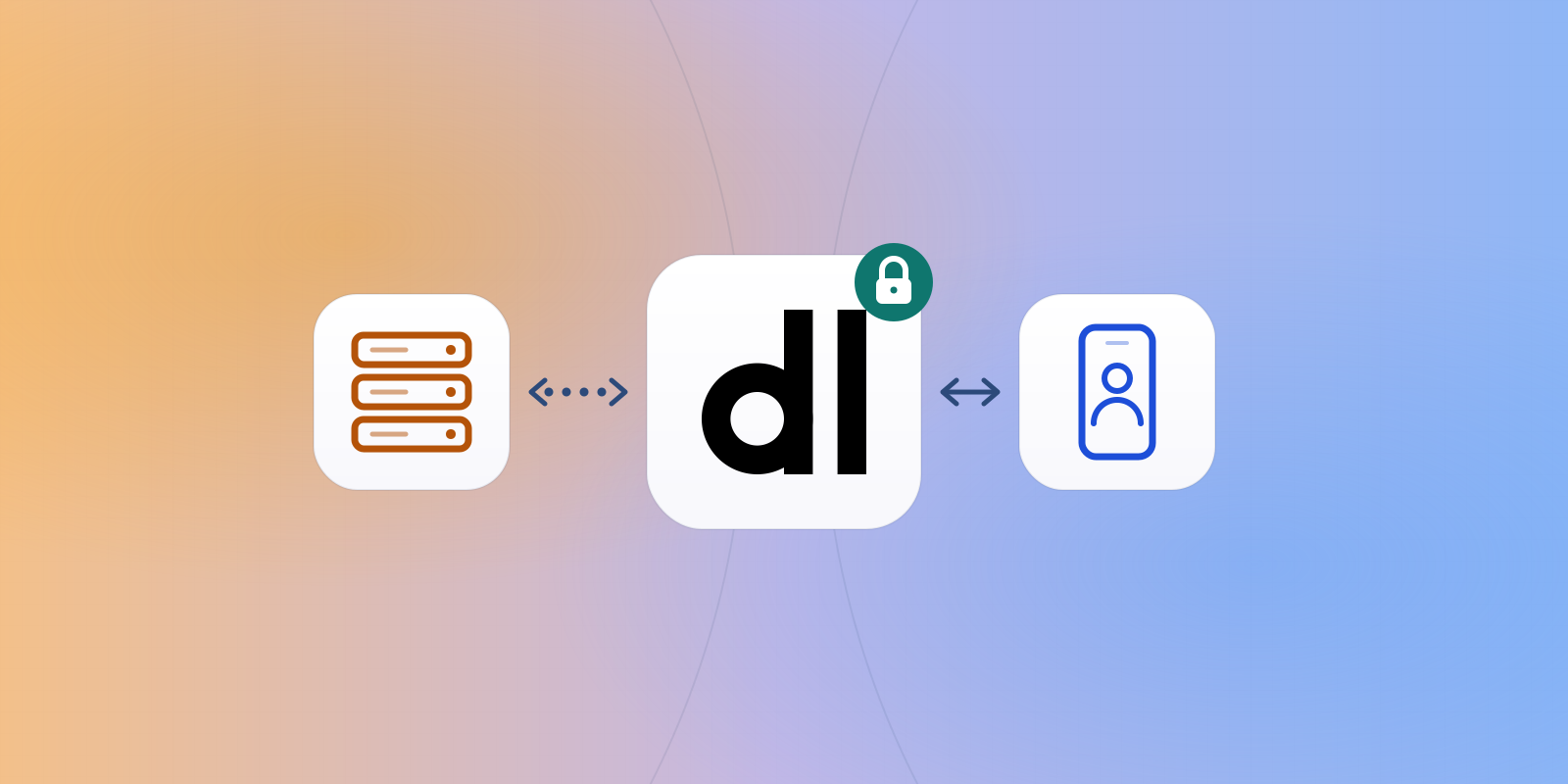
Three places, one picture
Read it left to right. The thin dotted line between the server and the harness carries text only, in small pieces, and nothing stays behind. The solid line between the harness and you carries everything you see, which means everything you see came through your own rules.
The AI server: it thinks, and it keeps nothing
The AI server is where the language model runs. E1pi uses three today: Anthropic, Fireworks AI and OpenAI, with E1pi's own fine-tuned business model, hosted on E1pi's own hardware, doing the daily bookkeeping and a frontier model switched in when a task calls for one.
The important word is API. We use the API products of these companies, not their chat apps. A chat app is a consumer product; what you type into it is kept to improve the service. The API is the business product, with business terms, and on our API accounts zero data retention is enforced in the settings. A request arrives, the model answers, and the request is not stored on their side afterwards: not for support, not for training, not for anyone to read later.
What does the server receive? Text. Your question, the instructions E1pi gives the model for that task, and the pieces of text the harness has chosen to send with it, a few hundred words at a time: the lines of the statement that matter, the rows of the ledger that answer the question. It does not receive files. It does not receive your database. It does not receive your Microsoft 365 token, your ERP login or your bank credentials, because the model never holds a credential of any kind. The harness does.
For a conversation to make sense, the model has to see what was said before it, so each turn carries the conversation so far, as text, for as long as it takes to answer. The record of that conversation lives in the harness, not on the AI server.
The AI harness: where every tool call runs
This is the part to understand if you want to understand the data policy, because it is the only part that touches your data directly.
A model cannot open a PDF, query Tally, read an email or send a WhatsApp message. It can only ask. When E1pi reads your bank statement, the model says, in effect, read this file, and the harness reads it. The model says fetch the vouchers for October, and the harness queries the ERP. The model says draft this reply, and the harness opens a compose sheet for a person to send. Each of those asks is a tool call, and every one of them runs in the harness: on the harness's disk, with the harness's logins, under the harness's rules.
That makes the harness the gate. It decides which tools exist at all, who may use each one, what each tool is allowed to return, and how much of that goes back to the model. The rule that only a few hundred words go up at a time lives here. The rule that a Microsoft 365 token is never placed in a prompt lives here. The rule that the finance group may query the bank and nobody else may lives here. And because every call passes through one place, every call is recorded: one timeline per user, request and result, in order, readable by your admin. Your data policy is not a document kept in the harness. It is the harness.
The model thinks. The harness does. Whatever the harness does not send, the model has never seen.
Managed by E1pi, or hosted by you
Because the harness is where the data is, where the harness runs is the decision that matters, and E1pi offers both, with the same code.
- E1pi runs the harness on servers E1pi operates. Sign in and start; we keep it updated.
- Your conversations, documents and the tool-call timeline sit in your organisation's own space on that server, reachable only by your team's passkeys.
- For companies that want to begin this week, and for a trial on live data.
- The same harness installs on a Mac or Windows computer next to your accounting software. The app installs it; you watch every command.
- Conversations, documents, logins and the timeline are all on your disk. E1pi never sees them; our support cannot read them without you.
- Updates arrive when you choose. For companies sensitive to their data, this is the one to pick.
Self-hosting also opens one further step for the most sensitive companies: the model itself installed on your own server, so that nothing leaves the building at all. The harness then calls a model on your network instead of one on the internet, and the dotted line in the picture above stays inside your office.
You: the browser, the app, Teams and WhatsApp
The third place is the one you look at: a browser, the iPhone or Mac app, a Teams chat, a WhatsApp thread. What arrives there is what the harness sends, a report, a draft, a question to approve. Nothing on your screen came from the AI server directly. It came through the harness, which means it came through your rules.
This is also where your policies become visible. Because every channel goes through the one harness, a policy is written once and applies everywhere: the person who may not see salaries in the app may not see them in Teams either. Rules companies set in their first week:
- Which tools each group may use. Finance can query the bank account; sales cannot.
- What a tool may return. The customer list without credit limits for the sales channel; with them for the finance head.
- Which model each task may use. E1pi's own model for daily bookkeeping; a frontier model for drafting a contract; a model on your own network for anything touching payroll.
- What is kept, where, and for how long. Where old conversations and their tool calls are stored, and who may read the timeline.
- Which channels are open to whom. WhatsApp for suppliers' bills only, with no access to any report.
You do not configure any of this in a settings screen. You tell the AI, in a sentence, and the harness is changed. Your admin sees that change on the timeline like any other.
Three levels of comfort. Pick yours.
Put the two choices together, where the harness runs and where the model runs, and there are three sensible arrangements. Most companies start at the first and move to the second once the trial has done its work; a few need the third from day one.
And a person still holds the pen
None of this sends anything by itself. The model drafts, the harness prepares the sheet, and a person presses Send, Approve or Cancel. That is true for an email, a payment voucher, a GST filing and a WhatsApp reply to a supplier. It is also the last line of the data policy: even what the harness is allowed to do, it does only when someone asks.
In your demo, ask us to open the timeline and read any call the AI made: what it asked for, what came back, and what was sent on. That is the fastest way to see the policy rather than read about it.
The AI server thinks and forgets. The harness does and remembers. You decide which building the harness lives in.
Run the business. Let E1pi run the back office. Read more at e1pi.com or register for a demo at e1pi.com/register.